

Impact & Results
The work at Think Brick is designed to create clarity when things are complex and momentum when decisions matter.
Rather than delivering abstract frameworks or one-off workshops, sessions are built around real challenges teams are facing right now. The impact shows up in how teams think, decide, and act together once the session ends.

What teams leave with
A shared understanding of what really matters
Clear priorities and sharper strategic focus
Decisions that feel owned, not imposed
Stronger alignment between people, strategy, and execution
Momentum to move from discussion to action
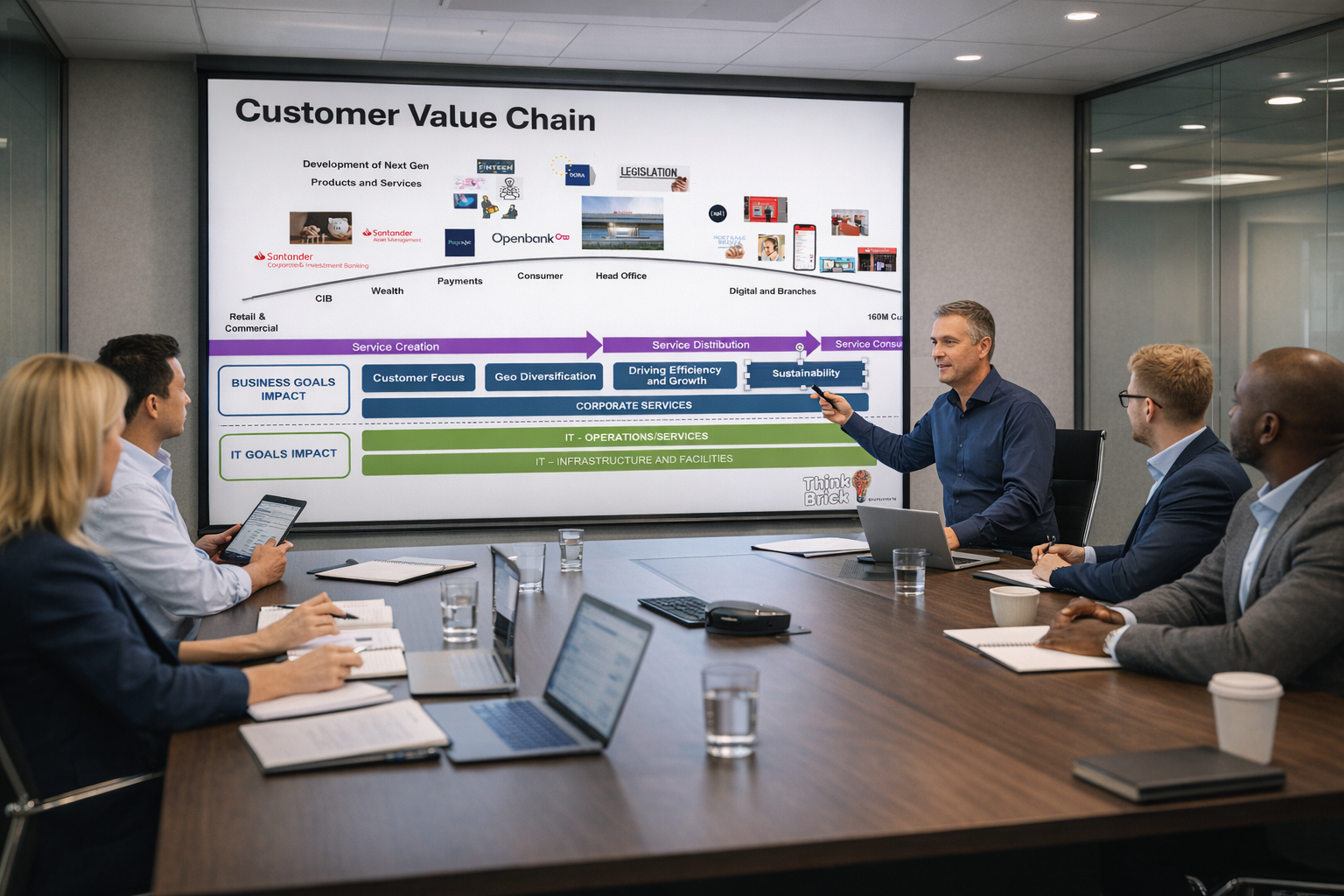
Measurable business impact
Teams increased opportunities by 120% by improving pipeline diversity, relevance and customer insight. The shift came from clearer thinking, stronger conversations and a deeper understanding of customer reality.
More broadly, teams report stronger relationships, sharper account and stakeholder strategies, greater confidence in complex buying environments and faster decision making.
The impact extends beyond sales, supporting leaders navigating digital transformation and high pressure environments, always with a focus on clarity, alignment and forward momentum.

A lasting shift, not a one-off moment
Every session is designed to leave behind more than insight. Teams take with them a shared language, a clearer picture of their situation, and the confidence to keep moving once the session ends.
The goal isn’t performance in the room. It’s better thinking after it.
Examples from our work
The sessions below offer a glimpse into how this work shows up in practice across different contexts, from enterprise workshops to leadership sessions and conference settings.
Each engagement is shaped by the people in the room, the decisions they need to make, and the complexity they’re navigating.